
Get started free

Get started free

Get started free
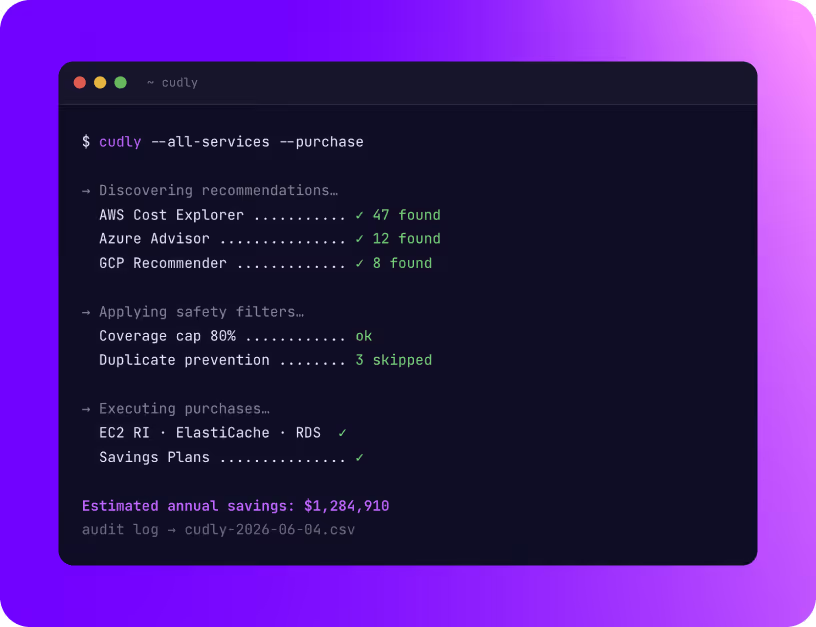


Run CUDly for free, review your recommendations, and see where cloud commitments can reduce spend.
Key features





Trusted by cloud teams

I think Reserved Instances or general bulk discounts on Amazon are fairly challenging … our volumes and our loads change fairly significantly … for us to go out and buy a one-year subscription for a Reserved Instance is something thatwe had never really considered because, what we thought was overloaded six months ago is now extremely underutilized today, and we would have just been stuck with that commitment for a year.

Scott Tsuchiyama
Director of Engineering, Spec
Full transparency: there have been other vendors that have reached out to me before … I never moved off of Archera because I think there are a lot of things about Archera that gives us the wins that we need and the savings that we are looking for with very little effort on our part. We implement Archera and then, from there, Archera is running in the background in order to get us those savings — those things are very, very valuable.

Kim Leung
Engineering Lead, Infrastructure, Hex

We are SOC 2 Type II and ISO 27001:2022 certified. Your data is never resold.




Frequently Asked Questions
Is CUDly free?

Yes. CUDly is free and open-source under OSL-3.0. Teams can use it whether or not they work with Archera.
Do I need Archera to use CUDly?
No. CUDly works as a standalone open-source tool. Archera is the upgrade path for teams that want more flexibility, guarantees, and protection from usage changes.
Can CUDly make purchases automatically?
No. Dry-run is the default, so CUDly surfaces recommendations and generates CSV exports first. Purchases only happen when you explicitly run with the purchase flag.
Which clouds does CUDly support?
CUDly is production-ready for AWS. Azure and GCP support are currently in preview, with coverage expanding across major commitment types.
What does Archera add?
Archera adds shorter terms, money-back guarantees, and protection when usage changes. It helps teams scale cloud savings with less financial risk than native long-term commitments.

